Pricing Gemstone Dice for Retail: Margins, Tiers, and Positioning
How to build a retail price for gemstone dice: what to include in landed cost, how volume tiers change the maths, and how to position stone against plastic and metal without competing on price.
The mistake that kills margin on imported dice is pricing off the unit price instead of the landed cost. Freight, duty, and packaging can add materially to what a set actually costs you. Here is how to build a price that survives contact with reality.
Start With Landed Cost, Not Unit Price
Your true cost per set includes:
1. Unit price from the factory — gemstone dice start from $1 per piece and rise with the material
2. Packaging — boxes, inserts, printed sleeves
3. Freight — remember stone is dense; check cost on packed weight
4. Import duty — varies by destination and classification
5. Inland delivery and handling
6. Breakage allowance — a small percentage for transit damage and returns
Only once you have that number can you apply a margin.
Volume Tiers Change the Maths
Unit price falls as quantity rises, with the biggest breaks typically starting around 300, 500, and 1,000 pieces. That means your margin at 1,000 units can look very different from your margin at 100.
The practical approach:
- Quote several quantities in one inquiry and get a tiered quotation back
- Model your retail price at each tier
- Decide whether the extra volume is worth the inventory risk — a better unit price on stock that sits for a year is not a saving
Position Against Plastic, Not Alongside It
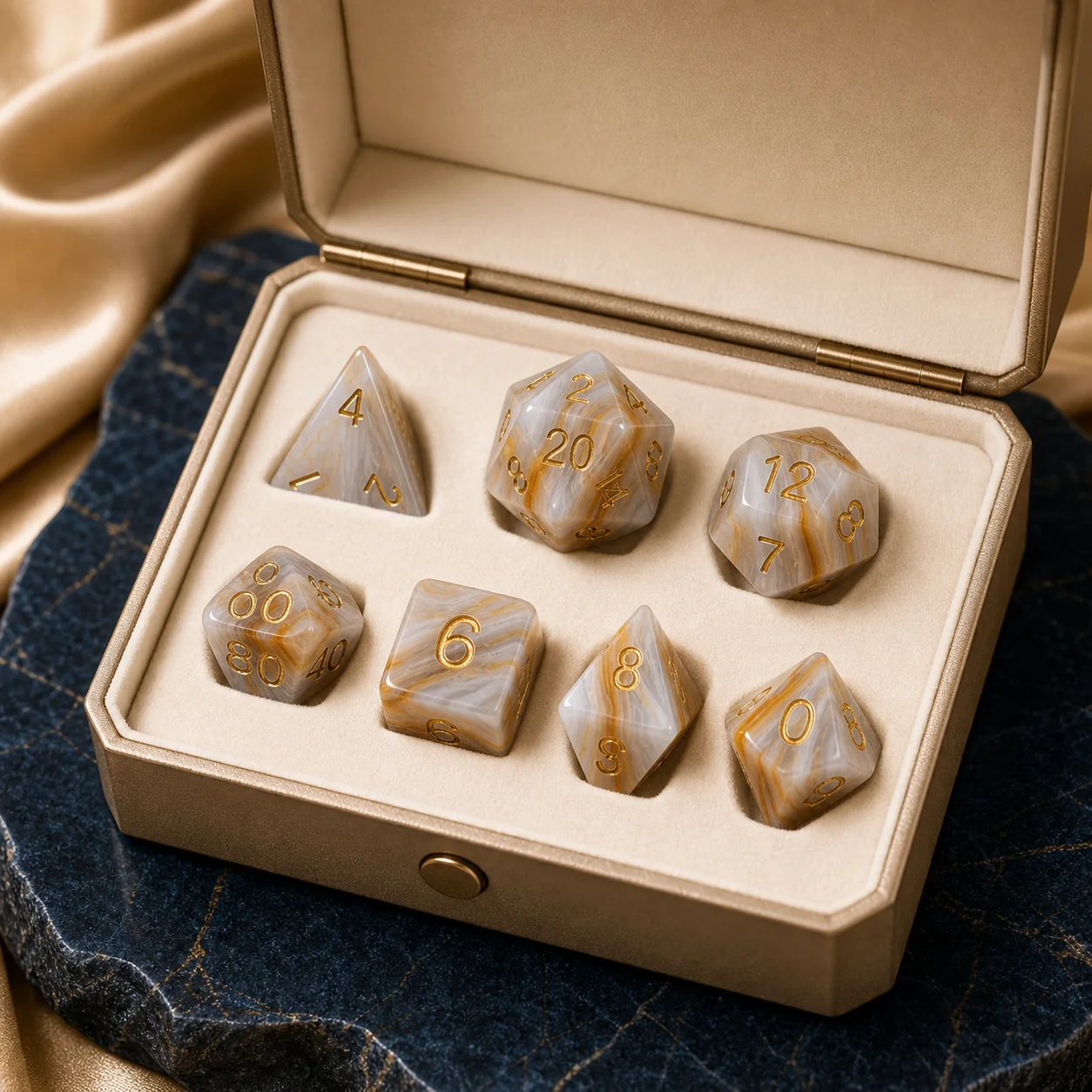
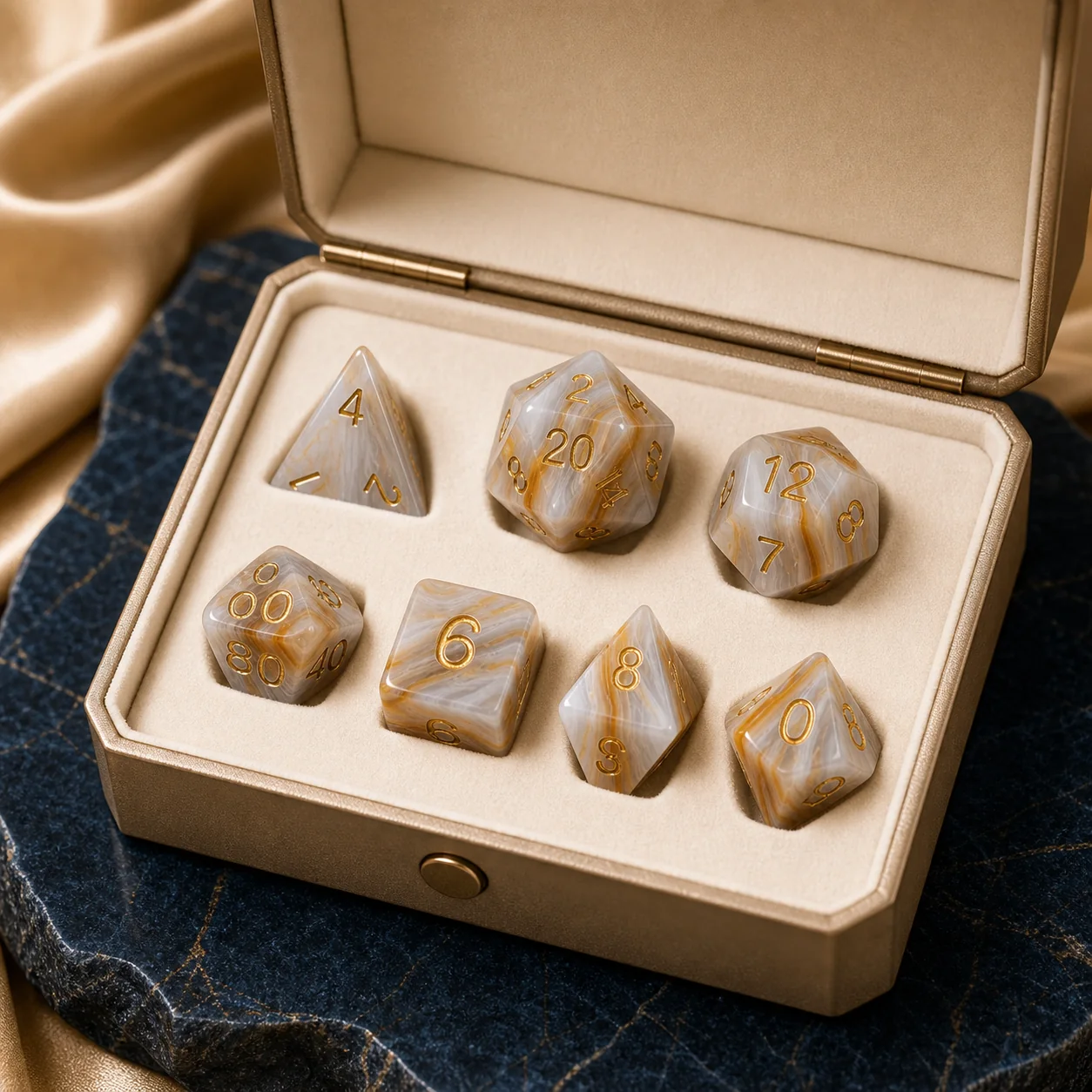
Gemstone dice cannot win a price fight against injection-moulded plastic, and should not try. They compete on things plastic cannot offer:
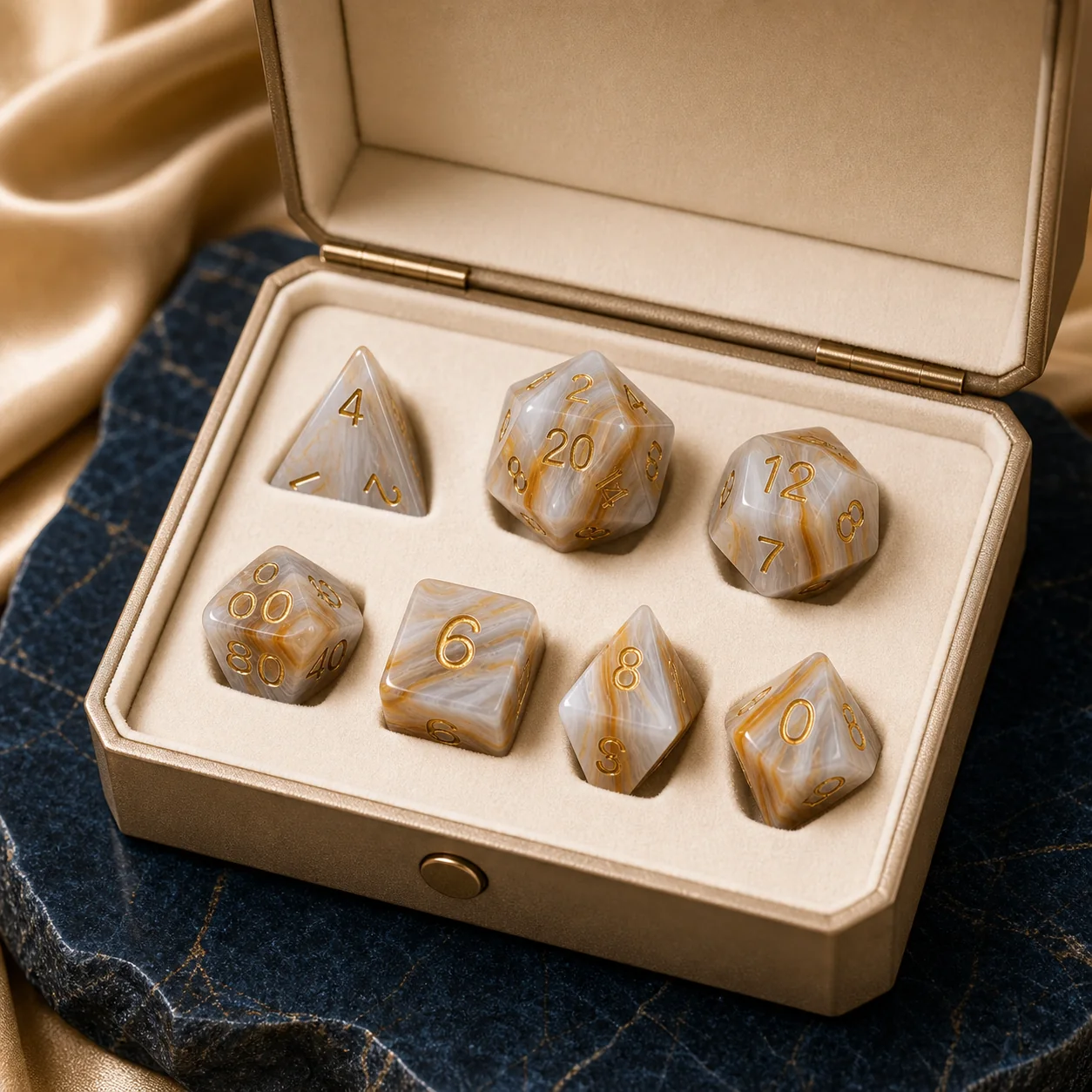
- Every set is unique — natural banding and inclusions mean no two pieces match
- Weight and feel — stone has a heft that players notice immediately
- Gift and collector appeal — a stone set is a present; a plastic set is a supply
- Display value — customers keep them out on a shelf
That is a different shelf, a different customer, and a different price bracket. Merchandise them accordingly: separate display, good lighting, and a card explaining the stone.
What Justifies a Higher Price at the Till
If you want customers to accept a premium, give them a reason on the shelf:
- Name the stone and say it is natural, not synthetic or glass
- Note that the set is hand-cut and hand-polished
- Mention that no two sets are identical
- Present it in packaging that matches the price you are asking
Frequently Asked Questions
What does a gemstone die cost wholesale?
Gemstone dice start from $1 per piece and rise with the material. Premium stones and complex engraving price higher; the exact figure is confirmed in your quotation.
How much cheaper is it to order 1,000 instead of 100?
Unit price drops as quantity rises, with the biggest breaks typically starting around 300, 500, and 1,000 pieces. Send your target quantities and you will get a tiered quote to compare.
Should I sell gemstone dice at the same margin as plastic?
Most retailers apply a higher margin, because gemstone sets sell as gifts and collectibles rather than as playing supplies.
What is the biggest hidden cost when importing dice?
Freight, because stone is heavy, followed by import duty. Always price from landed cost, not the factory unit price.
Get a Tiered Quotation
Send your target quantities and destination and we will return pricing you can build a retail strategy on.
- WhatsApp: +86 150 1532 0471
- Email: info@customgemdice.store
Interested in Our Products?
Contact us for bulk orders, custom designs, and OEM/ODM services.