How Are Gemstone Dice Made? Inside the Factory Process
Gemstone dice are cut and polished from solid natural stone in seven main steps. Here is how a raw block becomes a balanced, fair-rolling die — straight from the factory floor.
Gemstone dice are made by cutting, shaping, and polishing solid natural stone — not by pouring resin into a mould. That single difference is why each die is unique and why the process takes real skill. Below is how we turn a rough block of stone into a balanced, fair-rolling die at our Dongguan factory.
What Are Gemstone Dice?
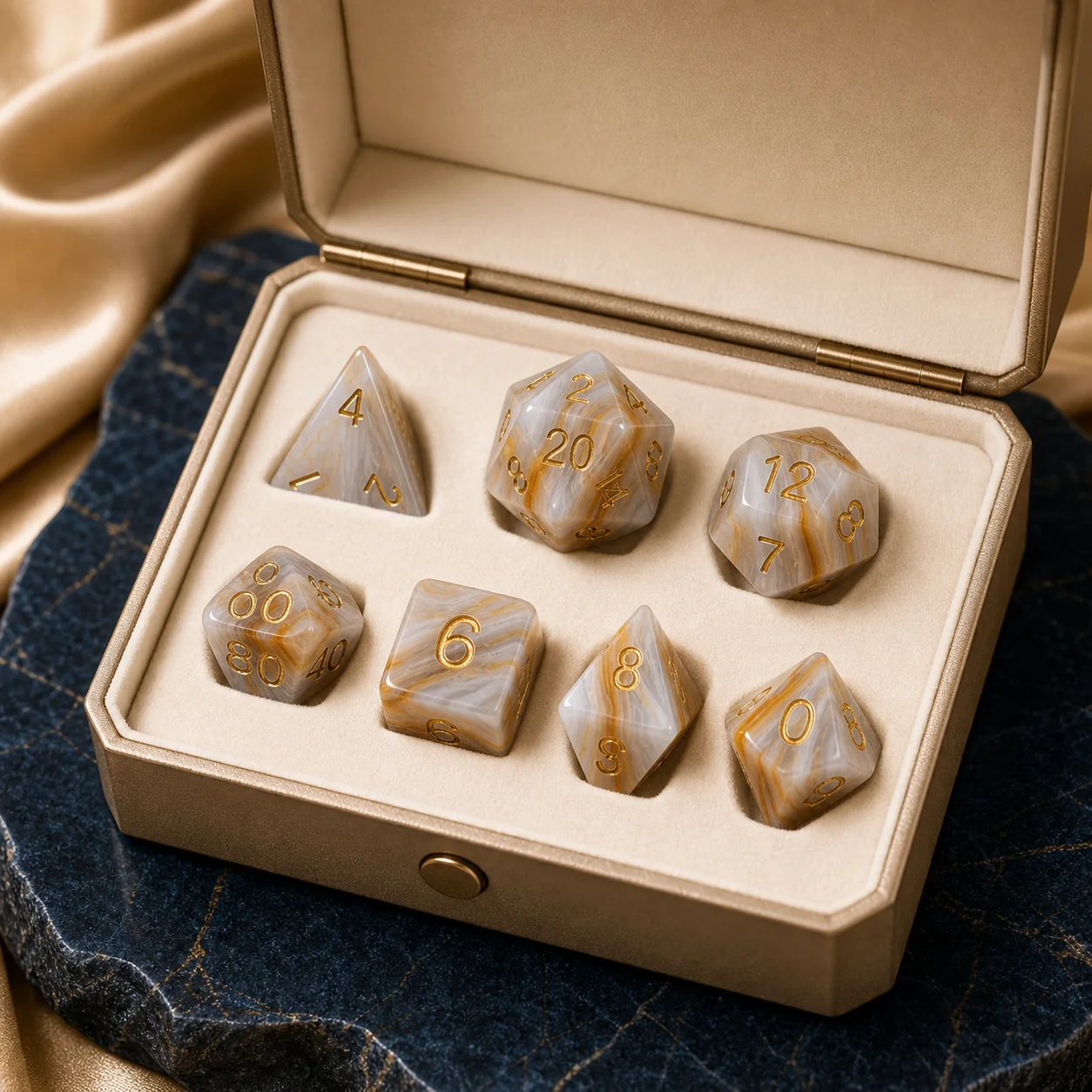
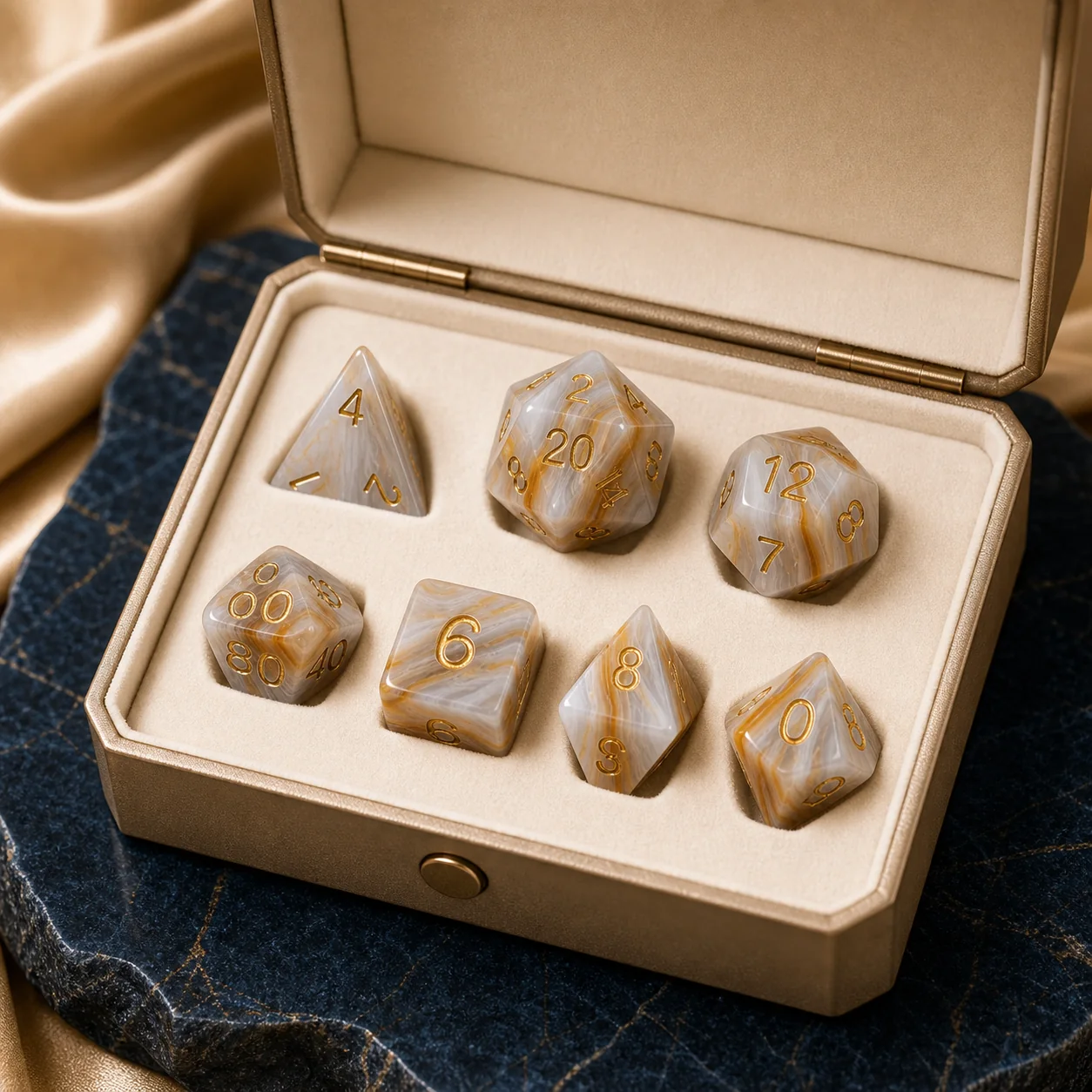
Gemstone dice are polyhedral gaming dice (D4, D6, D8, D10, D%, D12, D20) carved from natural minerals such as agate, quartz, amethyst, tiger eye, or obsidian. Unlike plastic or resin dice, they are cut from solid stone, so every piece carries its own natural colour and pattern.
The 7 Steps of Making Gemstone Dice
1. Stone Selection
Raw stone is inspected and graded. We look at colour, banding, hardness, and internal cracks, then set aside material suitable for dice.
2. Rough Cutting
The stone is cut into blanks slightly larger than the final die, leaving material to shape and polish away.
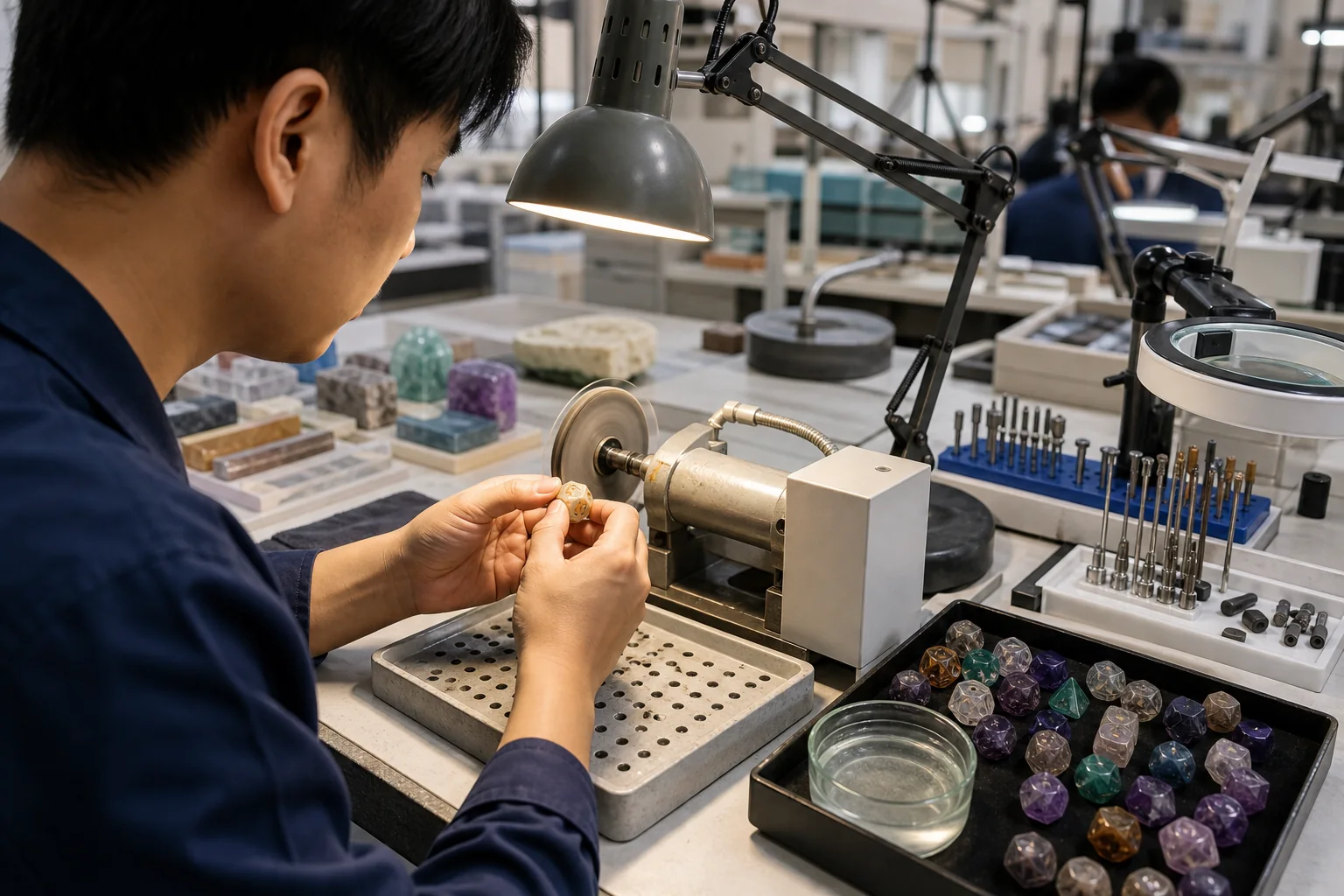
3. Faceting the Shape
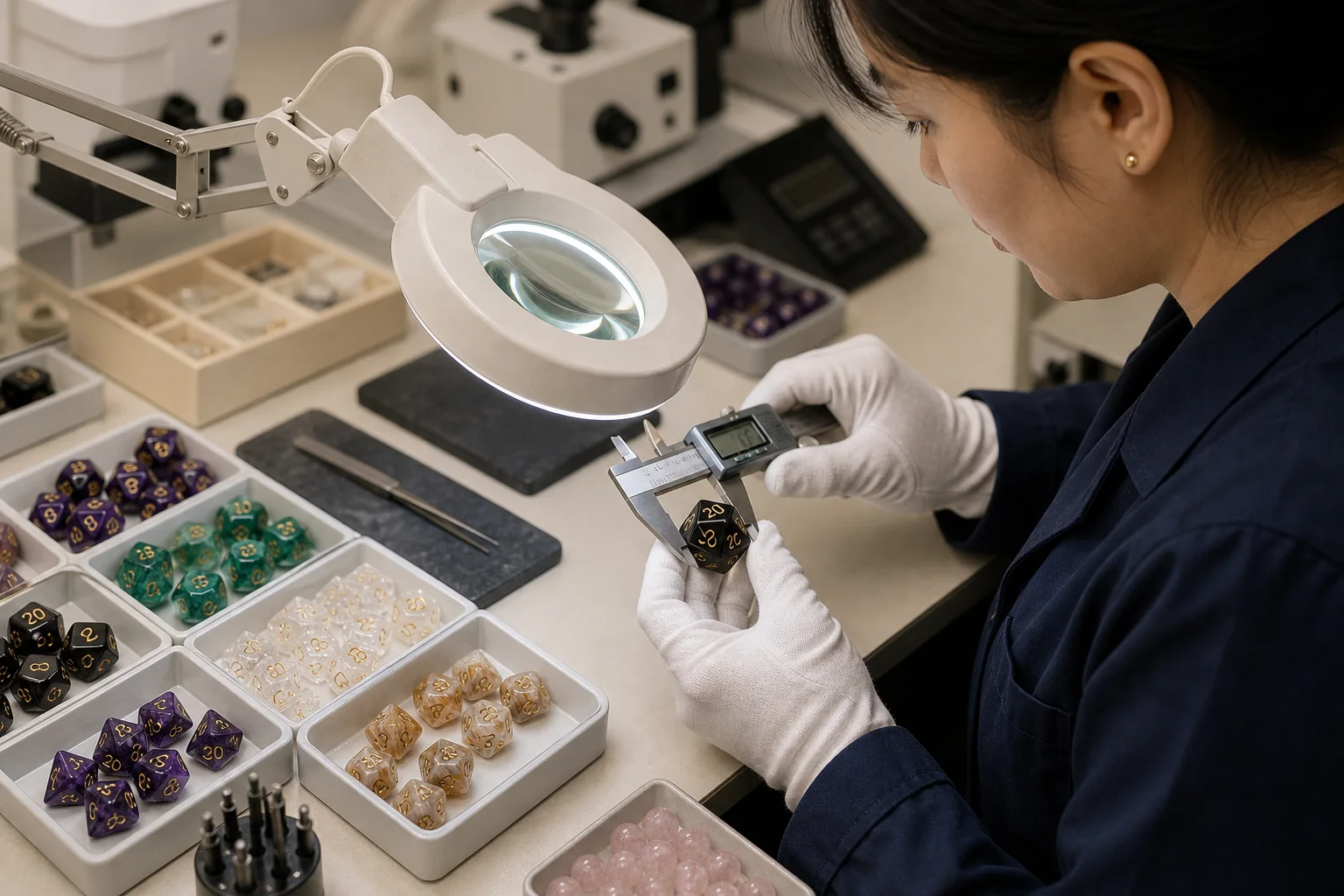
Each face is ground to the correct geometry — a D20 needs twenty matched triangular faces, a D6 needs six square ones. We hold faces to within about 0.1mm so the die rolls fairly.
4. Polishing
Faces are progressively polished from coarse to fine until the surface is smooth and the stone's natural depth shows through. Softer stones (like fluorite) are polished more gently than hard ones (like agate).
5. Engraving the Numbers
Numbers are laser-engraved or carved into each face, then filled with paint, gold, or another colour for contrast and legibility.
6. Quality Control & Batch Matching
Every die is checked for dimensions, polish, and engraving. For sets and retail lines, dice are grouped so colour and pattern stay consistent across the tray.
7. Packaging
Finished dice are cleaned, protected, and packed — in pouches, gift boxes, or branded packaging for OEM orders.
Why Gemstone Dice Cost More Than Plastic
- Natural stone must be carved away, not moulded, so material is lost as waste.
- Hand finishing and inspection take time per piece.
- Harder stones wear tooling faster and slow production.
- Rare or heavily patterned stone costs more and yields fewer usable dice.
This is also why gemstone dice command premium retail prices and healthier margins than mass-market plastic.
How Long Does It Take?
For standard stock designs, production typically runs 7–15 business days. Custom and OEM orders — with engraving, number colours, and branded packaging — usually take 15–30 business days depending on quantity.
Frequently Asked Questions
Are gemstone dice balanced and fair?
Yes. We cut faces to tight tolerances (around 0.1mm) and inspect each die, so a quality gemstone die rolls fairly. Natural stone does vary in density, which is part of its character.
Which stone is most durable for dice?
Hard stones such as agate, quartz, and onyx resist chipping best. Softer stones like fluorite are more delicate and need careful handling.
Can I order custom gemstone dice with my own branding?
Yes — as a direct factory we offer OEM/ODM with custom engraving, number colours, and packaging. See our OEM guide or contact us for a quote.
Talk to the Factory
Want gemstone dice made for your brand? We're a direct manufacturer, not a reseller.
- WhatsApp: +86 150 1532 0471
- Email: info@customgemdice.store
Interested in Our Products?
Contact us for bulk orders, custom designs, and OEM/ODM services.